Every year, blasting accidents claim lives on mine sites around the world, and construction projects near cities lose months to permitting delays that could be avoided entirely. The International Council on Mining and Metals (ICMM) reported 42 worker fatalities among its member companies in 2024 alone, up from 36 in 2023 and 33 in 2022—a disturbing three-year upward trend (ICMM Safety Performance Report, 2025). Meanwhile, urban infrastructure projects from São Paulo to Riyadh sit idle for weeks, waiting for blasting permits that may never come. Traditional explosive methods are under siege from three directions: safety, regulation, and community opposition. Yet many project decision-makers still assume there’s no viable alternative.
There is. Non-explosive rock breaking has matured into a set of proven, production-grade technologies that deliver the breaking power you need without the blast zone. This guide walks through six established non-blasting methods, provides a data-driven comparison table, and gives you a decision framework so you can identify the right approach for your site in under 30 minutes.
You’ll learn which method matches your rock type, production targets, and regulatory environment, and why integrated drill-split technology is emerging as the go-to solution for operations that need both safety and speed.
About this guide: Produced by the engineering team at Zhongde Dingli Group—manufacturing non-explosive rock breaking equipment for 20+ years, with machines operating across 50+ countries. Learn more about us →
Key Takeaways
- ICMM data confirms mining fatalities have risen for three consecutive years (33→36→42), with blasting-related hazards among the leading causes. Non-explosive alternatives are a safety imperative, not a luxury.
- Six proven non-explosive methods now cover the full spectrum from silent chemical expansion to high-production integrated drill-split systems, each with distinct strengths for specific site conditions.
- Drill-split integrated technology (like the ZD115) combines drilling and splitting in one machine, delivering up to 30,000 tons of splitting force and daily output of 2,000 tons—50% faster than traditional two-step approaches.
- The global rock breaker market is projected to grow from $3.2 billion (2025) to $6.7 billion by 2035 (CAGR 7.5%), driven by tightening blasting regulations and demand for safer alternatives.
- Switching from blasting to non-explosive methods eliminates permit delays, blast-zone clearances, and community complaints—hidden costs that often exceed the price of explosive materials themselves.
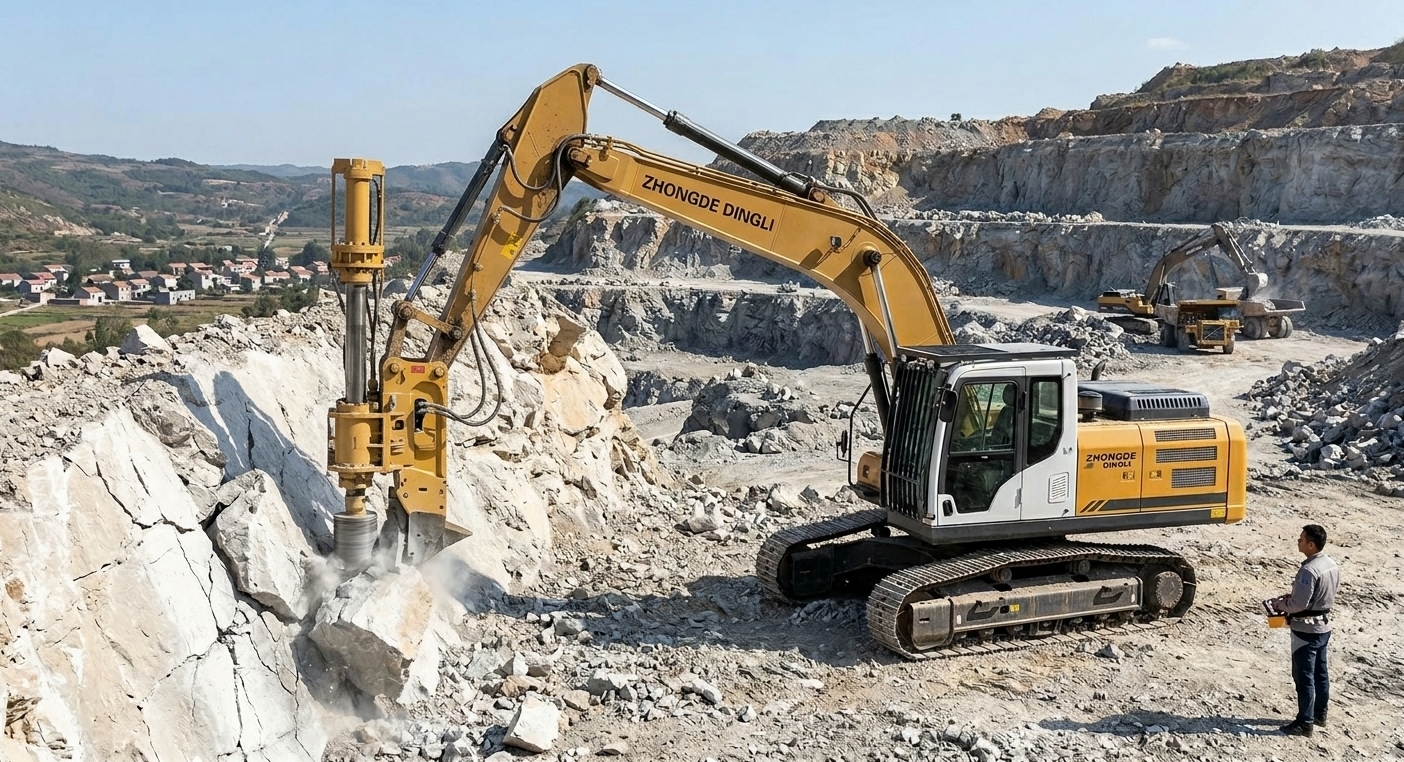
ZD115 drill-split integrated machine in operation at a limestone quarry
Why the World Is Moving Away from Explosive Blasting
Safety: The Human Cost of Blasting
The numbers don’t lie. Beyond the ICMM fatality statistics, blasting carries specific hazards that non-explosive methods eliminate entirely: flyrock, toxic gas emissions, and ground vibration.
Flyrock—rock fragments ejected beyond the intended blast zone—is responsible for some of the most devastating blasting accidents. The U.S. CDC’s National Institute for Occupational Safety and Health has documented that flyrock and failure to secure the blast area dominate blasting-related accidents in mining, “especially in surface mining,” and that these incidents “tend to result in critical injuries or fatalities” (CDC Stacks, Flyrock Issues in Blasting).
Then there are the invisible killers. Detonating explosives releases carbon monoxide (CO) and nitrogen oxides (NOx) in concentrated plumes. In underground operations, these gases can accumulate to lethal levels within minutes. Ground vibration from blasting causes structural damage to nearby buildings and infrastructure, triggering costly legal disputes and project shutdowns.
For Marcos, a quarry supervisor in Minas Gerais, Brazil, these risks became real in 2023. A routine blast sent flyrock through the roof of a maintenance shed 200 meters from the shot point. No one was inside that day, but the near-miss shut down operations for three weeks while regulators conducted a full investigation. “We were lucky no one died,” Marcos recalls. “After that, we started looking for alternatives that didn’t involve explosives at all.”
Regulatory Pressure: Global Blasting Restrictions
Governments worldwide are tightening the screws on blasting permits. The trend is most visible in rapidly urbanizing regions across the Middle East, South America, Africa, and South Asia—exactly the markets where mining and infrastructure investment is surging.
Vibration limits are getting stricter. In sensitive urban areas, peak particle velocity (PPV) is often capped at ≤ 0.5 in/s (about 12.7 mm/s) to protect nearby structures. Blasting regularly exceeds this threshold by a factor of 5–10, making it a non-starter for any project near homes, hospitals, or heritage buildings.
Noise regulations add another barrier. Nighttime blasting is typically restricted to noise levels below 65 dB in urban zones, roughly the volume of a normal conversation. A single blast generates 120–140 dB, equivalent to a jet engine at takeoff. The gap between what blasting produces and what regulations allow is enormous.
In cities like Dubai, Riyadh, Bogotá, and Nairobi, obtaining a blasting permit now requires environmental impact assessments, community notification periods, vibration monitoring plans, and sometimes even individual building-by-building structural surveys. The permitting process can stretch from 3 to 12 months, and there’s no guarantee of approval.
Here’s the reality: regulations only tighten, never loosen. Every year you wait means fewer blasting windows, stricter permit requirements, and higher compliance costs. The operations that switch now will have a 12–18 month head start on competitors who wait.
Environmental and Community Impact
Beyond regulation, there’s the court of public opinion. Blasting generates visible dust clouds, audible shock waves, and measurable ground tremors. Each blast is a public event that nearby residents feel, hear, and see.
Dust and particulate matter from blasting carry silica and other respirable hazards far beyond the immediate site. CO and NOx emissions contribute to local air quality degradation. And in communities near mining or construction sites, every blast is a reminder that someone chose convenience over their comfort and safety.
Community complaints don’t just create bad PR. They create project shutdowns. In multiple documented cases across Africa and Latin America, sustained community opposition has forced mining operations to suspend blasting for months, sometimes permanently. The financial cost of these delays dwarfs the cost of the explosives themselves.
6 Proven Non-Explosive Rock Breaking Methods
The good news: the technology has caught up with the demand. Six proven non-explosive methods now cover every scenario from silent overnight demolition to 2,000-tons-per-day quarry production. Operations that made the switch report something unexpected—not just safer sites, but more productive ones.
Quick Comparison
| Method | Safety | Noise | Vibration | Speed | Cost | Best For |
|---|---|---|---|---|---|---|
| Hydraulic Splitting | ★★★★★ | ★★★★★ | ★★★★★ | ★★★ | ★★★ | Precision work near structures |
| Drill-Split Integrated | ★★★★★ | ★★★★ | ★★★★★ | ★★★★★ | ★★★★ | Quarry, mining, tunneling |
| CO2 Fracturing | ★★★★★ | ★★★★ | ★★★★ | ★★★★ | ★★★ | Coal mines, tunnels |
| Expanding Grout | ★★★★★ | ★★★★★ | ★★★★★ | ★ | ★★★ | 24/7 silent operation |
| Mechanical Breaking | ★★★ | ★★ | ★★ | ★★★★★ | ★★★★ | Large-scale bulk breaking |
| Thermal Spalling | ★★★★ | ★★★ | ★★★★ | ★★ | ★★★★★ | Small-scale, low budget |
Five stars = exceptional performance. For Safety and Vibration, more stars = safer/less vibration. For Speed and Cost, more stars = faster/more cost-effective.
Want the details? Read on for a deep dive into each method.
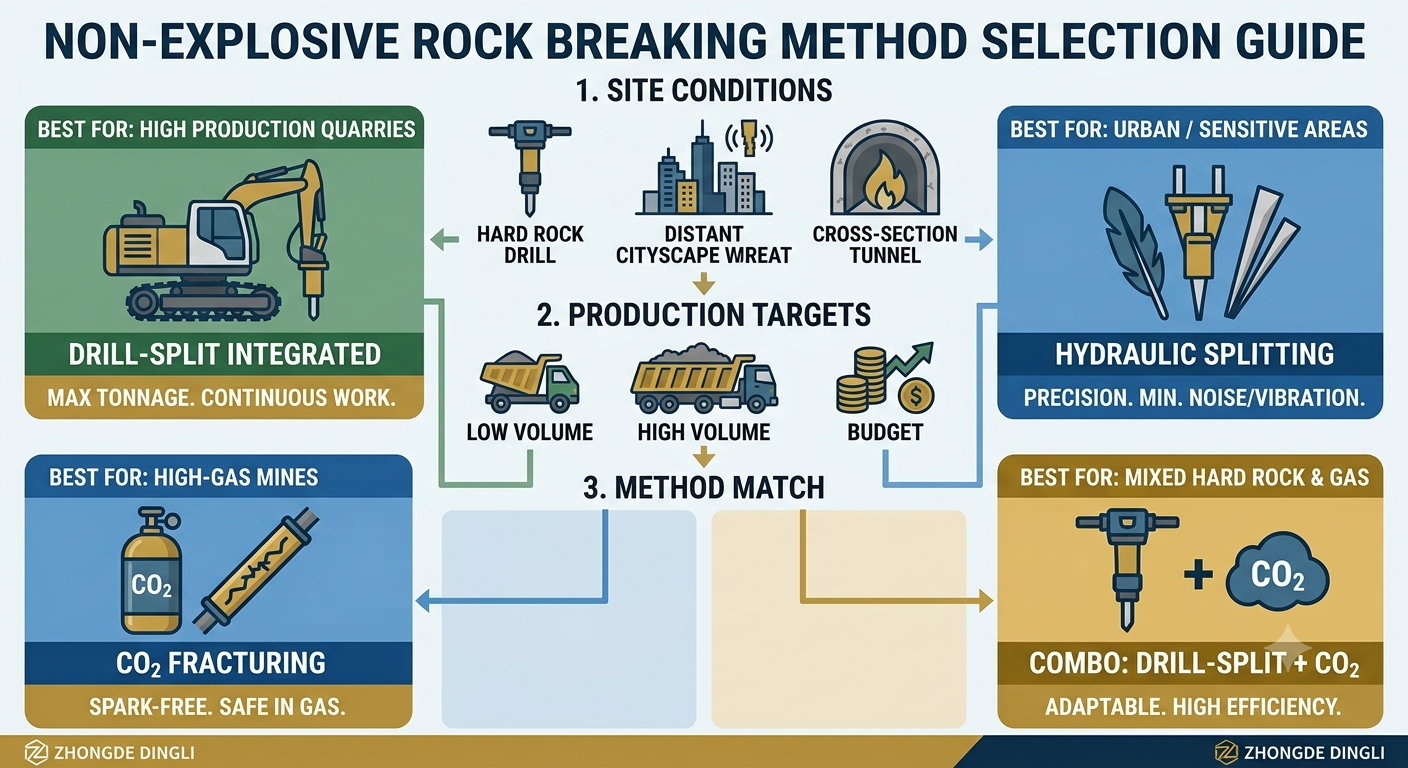
Six proven non-explosive rock breaking methods compared
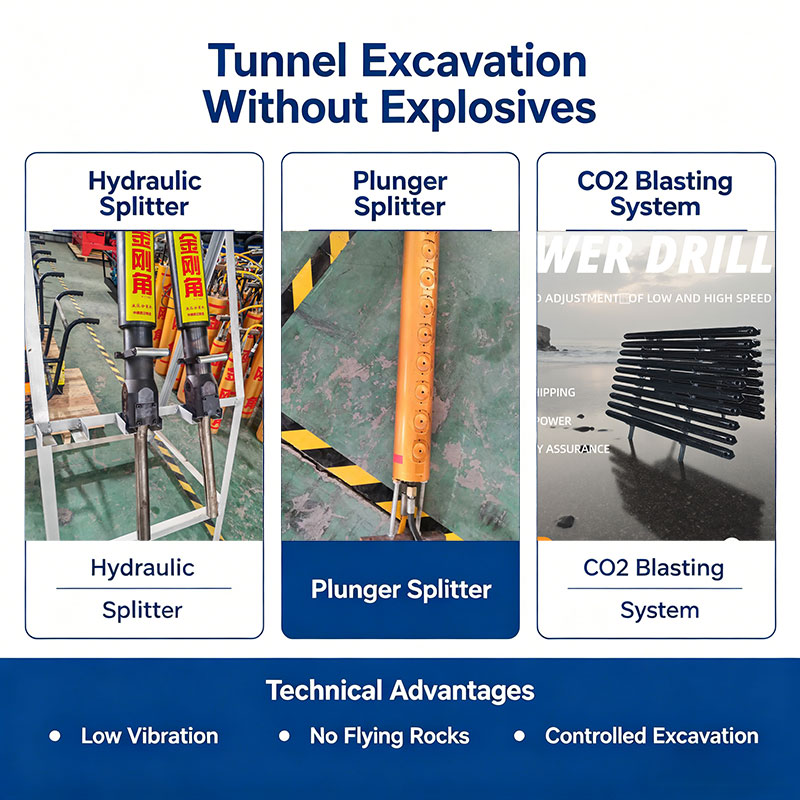
1. Hydraulic Rock Splitting
Hydraulic rock splitting is one of the most established non-explosive methods, and for good reason: it’s precise, quiet, and generates virtually no vibration.
The process is straightforward. A hole is drilled into the rock, a set of hydraulic wedges (feathers and a wedge) is inserted, and hydraulic pressure forces the wedge between the feathers, splitting the rock along its natural lines of weakness.
Key specs: Splitting force ranges from 1,500 to 30,000 tons depending on model. Noise level stays under 70 dB. Vibration is negligible.
The biggest advantage is pinpoint accuracy. You can split rock to a predetermined line with minimal overbreak, and operate safely right next to existing structures, utilities, and occupied buildings. No special permits are required in most jurisdictions.
The main limitation: you need a separate drill rig for pre-drilling, which adds a step and equipment cost. Splitting speed also depends on rock hardness and joint patterns. For precision work near sensitive structures, hydraulic splitting rod systems remain the gold standard.
2. Drill-Split Integrated Technology ⭐
This is the method that makes the safety-vs-productivity trade-off disappear. One machine. Zero blasts. Continuous output.
Traditional hydraulic splitting requires two separate operations: drill the hole first, then move in the splitter. That means two machines, two crews, and significant idle time between steps. Drill-split integrated technology eliminates that gap entirely.
How it works: A single machine performs both precision drilling and hydraulic splitting in one continuous cycle:
- Precision drilling — the integrated drill creates a hole at the exact position and depth required.
- Hydraulic splitting — without repositioning, the splitting mechanism activates and fractures the rock.
- Reset and repeat — the machine retracts and moves to the next hole position. A single-hole cycle takes approximately 3 minutes.
Ahmed manages a limestone quarry outside Muscat, Oman. For years, his operation relied on controlled blasting when they could get permits. “Some months, we’d wait six weeks for a blasting window,” he says. “During that time, the crew sat idle and we burned through overhead.” After switching to a ZD115 drill-split integrated machine, his quarry hit 1,800 tons per day with zero blasting permits. “The machine runs all day, every day. No clearance zones, no waiting, no complaints from the village two kilometers away.”
ZD115 Key Performance Data
- Maximum splitting force: 30,000 tons
- Daily production capacity: up to 2,000 tons of rock
- Remote operation range: 50 meters
- Integrated drilling + splitting in one pass—no separate drill rig required
Compared to the traditional two-step approach, drill-split integration delivers a 50% efficiency improvement and 60% reduction in labor. Computer-controlled drilling depth and splitting pressure ensure consistent, repeatable results.
Best suited for quarries, mining operations, tunnel excavation, urban construction, and high-gas underground mines—any application that demands both safety and production volume.
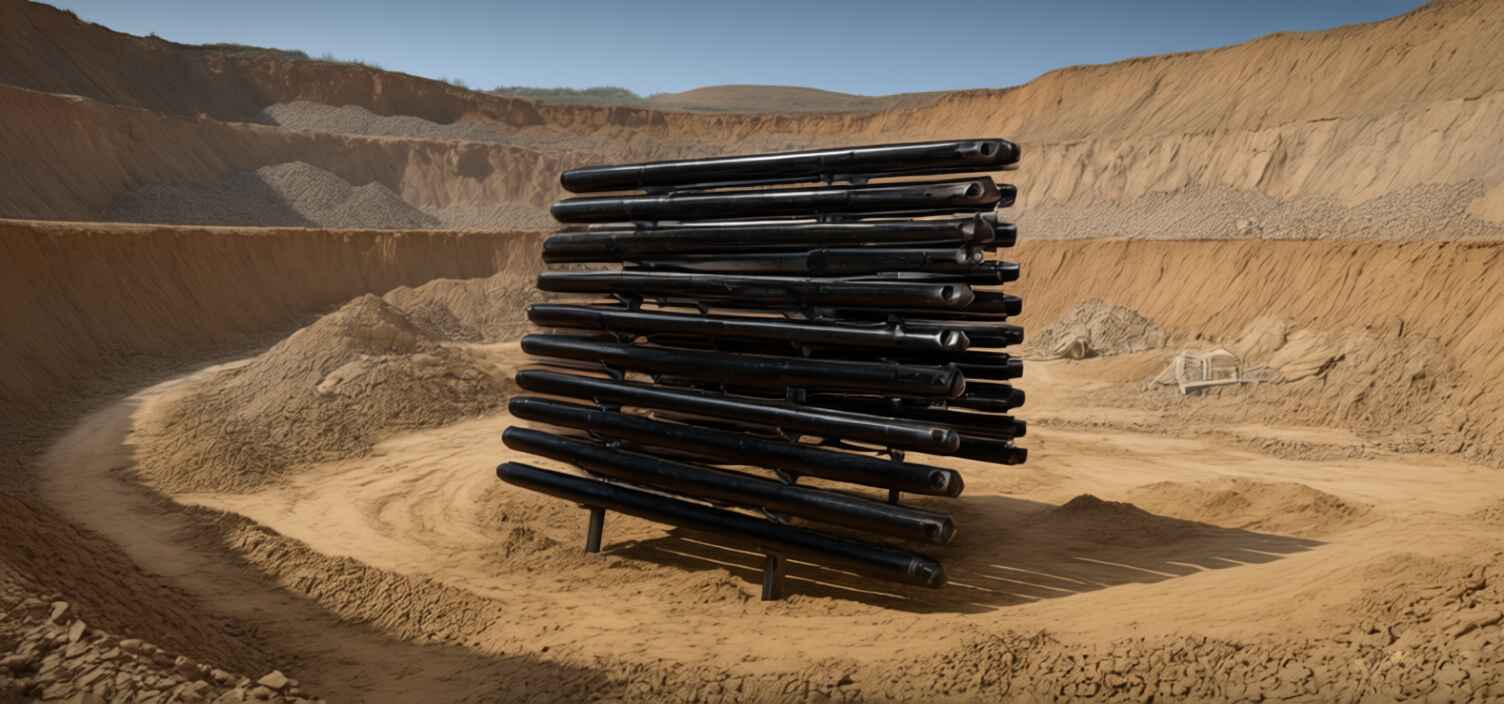
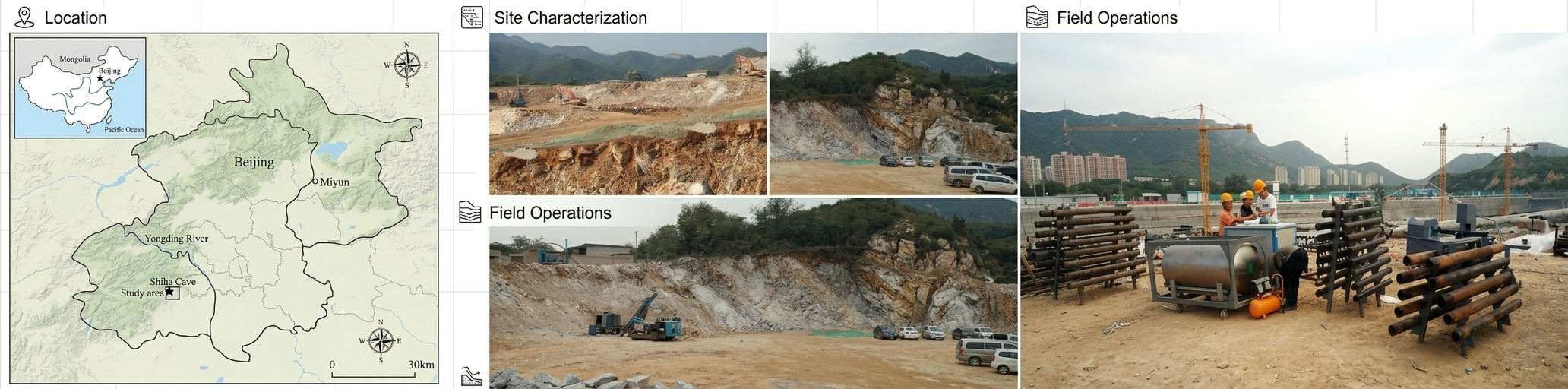
3. CO2 Gas Fracturing
CO2 gas fracturing uses the rapid phase-change expansion of liquid carbon dioxide to fracture rock without any explosive materials whatsoever. It’s classified as non-explosive, produces no spark and no flame, and generates low vibration compared to conventional blasting.
Liquid CO2 is loaded into a fracturing tube and inserted into a drilled hole. A heating element triggers the phase change from liquid to gas. The resulting expansion generates pressures up to 300 MPa inside the borehole, fracturing the surrounding rock.
The process produces no toxic gas byproducts (CO2 is inert and naturally dissipates) and can be paired with drill-split machines for a combined approach. For operations in high-gas environments like underground coal mines, this is a critical safety advantage. The CO2 gas fracturing system is the preferred method for coal seams and gassy tunnels.
Limitations include the need for pre-drilling, consumable fracturing tubes (a recurring cost), and less precision than hydraulic splitting for controlled-line excavation. For a deeper technical dive, see our comprehensive CO2 rock breaking guide.
4. Chemical Expansion (Expanding Grout)
Expanding grout—also called soundless chemical demolition agent (SCDA)—works on a simple principle: chemical reaction creates expansion pressure, and expansion pressure breaks rock.
A dry powder is mixed with water and poured into pre-drilled holes. As the mixture hydrates, it expands, generating pressures up to 120 MPa (about 17,400 psi). Over a period of 2–24 hours depending on formulation and temperature, the expanding grout fractures the rock along the hole pattern.
The appeal is obvious: completely silent operation, zero vibration, and 24/7 unattended work. Pour the grout and walk away; it works while you sleep. No special operator skills required.
The trade-off is speed. Hours to overnight, compared to minutes for other methods. Performance also drops in cold weather, and extreme heat can cause premature blowouts. Expanding grout finds its niche in situations where even minimal noise or vibration is unacceptable: demolition adjacent to hospitals, historic preservation, and residential-area projects that need to operate around the clock without disturbing neighbors.
5. Mechanical Breaking (Hydraulic Breakers)
The most familiar non-explosive method needs little introduction. Hydraulic breakers mounted on excavators use impact energy to fracture rock directly. A hydraulic piston drives a heavy chisel into the rock surface at high frequency, delivering repeated impact blows.
The advantages are practical: high productivity on soft to medium rock, wide availability (most construction fleets already have excavator-mounted breakers), no pre-drilling required, and mobility between work faces.
The downsides are equally practical. Noise levels of 100–120 dB far exceed urban limits. Vibration is significant. Effectiveness drops on very hard rock like granite or basalt, and chisel point wear drives up consumable costs. Hydraulic breakers are the workhorse of bulk rock breaking on open sites where noise and vibration aren’t constraints. In urban or sensitive environments, they’re often the wrong tool for the job.
6. Thermal Spalling
A niche technique, thermal spalling uses intense, localized heat to break rock through differential thermal expansion. A flame or plasma jet directed at the rock face causes the outer layer to expand faster than the interior, and flakes spall off.
The main advantage is very low equipment cost in simple configurations, and the ability to work in confined spaces where larger machines can’t fit. The application range is narrow—only certain rock types respond well to thermal stress—and the process is slow and energy-intensive compared to all other methods. Thermal spalling is reserved for small-scale projects, remote locations with minimal equipment availability, or specific rock types that respond well to thermal stress.
How to Choose the Right Rock Breaking Method: A Decision Framework
Selecting a rock breaking method isn’t about finding the “best” technology—it’s about finding the right technology for your specific conditions. Here’s a three-step framework to guide your decision.
Step 1 — Assess Your Site Conditions
Start by documenting the constraints that will limit your options:
- Rock type and hardness. Granite (Mohs 6–7) requires different approaches than limestone (Mohs 3–4). Harder rock demands higher splitting force or fracturing pressure.
- Proximity to sensitive receptors. Are there homes, hospitals, schools, or heritage structures within 500 meters? If yes, vibration and noise limits will rule out blasting and mechanical breaking.
- Underground conditions. For tunnel and mine operations, is there methane or other flammable gas present? High-gas environments mandate spark-free methods.
- Access and space. Can large equipment reach the work face? Confined tunnels may limit you to compact hydraulic splitters or chemical methods.
Step 2 — Define Your Production Requirements
Be specific about what “success” looks like for your operation:
- Daily production target. Do you need 200 tons per day for a small urban project, or 2,000+ tons per day for a commercial quarry?
- Project timeline. Is this a multi-year mining operation or a three-month construction contract? Long-term projects justify higher equipment investment; short-term jobs may favor rental or lower-capex methods.
- Budget structure. Are you capital-constrained (favoring lower upfront cost methods like expanding grout) or optimizing for total cost of ownership (where drill-split integration’s efficiency gains deliver superior ROI)?
Step 3 — Match Method to Scenario
| Scenario | Recommended Method | Why |
|---|---|---|
| Quarry with high daily volume | Drill-split integrated machine | Highest production rate among non-explosive methods; continuous operation |
| Urban sensitive area | Hydraulic splitting or expanding grout | Lowest noise and vibration; compliant with strict urban regulations |
| High-gas coal mine | CO2 fracturing + drill-split integration | Spark-free operation; paired with drill-split for efficiency |
| Mixed conditions | Drill-split + CO2 fracturing combo | Covers both hard-rock production and gassy-zone requirements |
Priya, a tunnel project manager in Karnataka, India, faced exactly this kind of mixed-condition challenge. Her tunnel alignment passed through both solid granite and a gassy shale zone. Blasting was approved for the granite sections but banned in the shale. Rather than run two completely different operations, she deployed a ZD115 drill-split integrated machine for the granite and added a CO2 gas fracturing system for the shale. “One crew, two methods, zero blasting,” she says. “We finished the tunnel three months ahead of schedule.”
The Business Case: ROI of Non-Explosive vs. Blasting
The upfront cost of non-explosive equipment is often higher than the per-shot cost of explosives. But that comparison is misleading, because it ignores the hidden costs that make blasting far more expensive than it appears.
Direct Cost Comparison
Blasting costs include:
- Explosive materials and detonators
- Licensed blaster fees (often a premium-rate specialist)
- Blasting permits and environmental assessments
- Blast-zone clearance (evacuating personnel within the safety radius)
- Standby time during clearance and post-blast ventilation
- Vibration and air-quality monitoring equipment
Non-explosive costs include:
- Equipment purchase or lease
- Operator labor (standard equipment operators, not licensed blasters)
- Consumables (drill bits, splitting wedges, or CO2 tubes)
- Fuel or electricity
When you add it all up, the total cost per cubic meter of rock broken is often comparable, and in many cases non-explosive methods come out ahead.
Hidden Savings
The real economic advantage of rock breaking without explosives lies in what you don’t have to pay for:
- No blast waiting time. Blasting operations typically fire 1–2 shots per day, with hours of preparation and clearance between each one. Non-explosive methods work continuously—8, 10, or 12 hours straight.
- No blast safety zone. Explosive blasting requires clearing all personnel within a radius that can extend 500+ meters. That means idle equipment, idle workers, and lost production time. Drill-split machines operate with the crew standing right next to them or 50 meters away via remote control.
- Zero regulatory compliance risk. No permits to chase. No environmental assessments to fund. No risk of a regulator shutting you down because a vibration monitor recorded an exceedance.
- Zero community complaints. No blast means no complaints. No complaints means no forced shutdowns. No shutdowns means consistent, predictable production schedules.
For a mid-size quarry producing 1,000–2,000 tons per day, the hidden savings from eliminating blast-zone downtime alone can exceed $50,000–$100,000 per year, depending on local labor rates and regulatory environment.
Consider the trajectory of Rashed, a quarry operations director in Saudi Arabia’s Eastern Province. His site was spending roughly $180,000 per year on blasting-related costs: permits, licensed blasters, clearance downtime, and community complaint mitigation. After switching to a drill-split integrated system, those costs dropped to near zero. The equipment investment paid for itself within 14 months. “The math was simple once we saw the real numbers,” Rashed says. “We were paying for blasting in ways we never calculated.”
Real-World Applications: Where Non-Explosive Methods Excel
Open-Pit Mining & Quarrying
In open-pit operations, production volume is king. The ZD115 drill-split integrated machine delivers daily output of up to 2,000 tons, making it competitive with controlled blasting in medium-hardness rock. The key advantage: it runs all day, every day, without the stop-start cycle inherent in blasting operations. Quarries in the Middle East and North Africa have reported 30–40% reductions in total project timeline after switching from blasting to drill-split integration, primarily because they eliminate permit waiting and blast-clearance downtime.
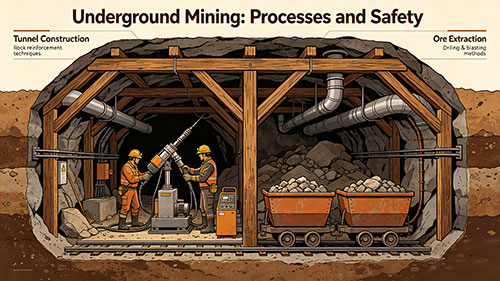
Tunnel & Underground Excavation
Underground, the case for non-explosive methods is even stronger. Blasting in tunnels generates toxic fumes (CO, NOx) that require extensive ventilation before crews can re-enter. Non-explosive methods produce zero toxic emissions, enabling near-continuous excavation cycles. The ZD115’s 50-meter remote operation capability adds another safety layer: operators control the machine from outside the immediate work face, reducing exposure to rock fall and other underground hazards.
Urban Construction & Demolition
In urban environments, vibration compliance is typically the binding constraint. Most municipal regulations limit ground vibration to ≤ 0.5 in/s PPV near occupied structures. Hydraulic splitting and drill-split integration both produce vibration levels well below this threshold, enabling rock excavation directly adjacent to buildings, bridges, and utilities. Expanding grout takes this further with zero vibration, enabling 24/7 silent demolition in the most sensitive locations.
High-Gas Coal Mines
Coal mines with elevated methane levels present one of the most dangerous environments for explosive use. A single spark can trigger a catastrophic explosion. CO2 gas fracturing eliminates this risk entirely: no spark, no flame, no detonation. When paired with a drill-split integrated machine, operators have a complete non-explosive rock breaking system that handles both the coal seam and the surrounding rock safely and efficiently.
Future Trends: The Rise of Integrated Rock Breaking Systems
The non-explosive rock breaking market is not just growing—it’s evolving. Three trends are reshaping the industry:
1. Integration over fragmentation. The old model—drill here, split there, fracture somewhere else—is giving way to integrated systems that combine multiple functions in one platform. The ZD115 drill-split integrated machine is the leading example, and the trend will accelerate. Future machines may integrate drilling, splitting, and material handling in a single automated platform.
2. Intelligence and automation. Remote operation is already standard on the ZD115 (50-meter range). The next generation will add real-time rock hardness sensing, automatic drill-depth optimization, and AI-powered splitting-force adjustment, reducing operator skill requirements and improving consistency.
3. Regulatory tailwinds. Environmental and safety regulations are tightening globally, not loosening. Every new restriction on blasting expands the addressable market for non-explosive alternatives.
The market data confirms this trajectory. The global hydraulic rock splitter market was valued at approximately $1.27 billion in 2024 and is projected to exceed $2.6 billion+ by 2034 at a CAGR of about 7.4% (Reports and Data, 2025). The broader rock breaker market—encompassing all non-explosive breaking technologies—was valued at $3.2 billion in 2025 and is forecast to reach $6.7 billion by 2035, growing at a CAGR of 7.5% (Global Market Insights, 2026).
These aren’t speculative projections. They reflect real capital allocation decisions by mining companies, construction firms, and infrastructure agencies worldwide, decisions driven by the same safety, regulatory, and efficiency pressures outlined in this guide.
Making the Switch: Your Next Step
If you’ve made it this far, you already know that non-explosive rock breaking isn’t a fringe idea. It’s where the industry is heading. The question isn’t whether to switch—it’s which method fits your operation and how soon you can start.
Here’s a quick recap:
- Six proven methods cover every scenario from silent overnight demolition to 2,000-tons-per-day quarry production.
- Drill-split integrated technology delivers blasting-level production with zero blast risk.
- The ROI case is real. When you account for hidden blasting costs (permits, clearance zones, downtime, community opposition), non-explosive methods are often cheaper, not more expensive.
- The market is moving. Billions of dollars in projected growth confirm that the industry’s future is non-explosive.
Zhongde Dingli Group has supplied non-explosive rock breaking equipment to operations in 50+ countries, from limestone quarries in Oman to coal mines in India. Our engineering team can assess your site conditions and recommend the right method—no pressure, no obligation.
Ready to Make the Switch?
Get a free site assessment from our engineering team. Response within 24 hours.
Schedule a Free Site Assessment →
100% free. No commitment required.
Frequently Asked Questions
For more answers, visit our frequently asked questions about non-explosive rock breaking →
What is the best non-explosive rock breaking method for quarries?
For quarry operations targeting high daily production (1,000–2,000+ tons), drill-split integrated technology is the top choice. Machines like the ZD115 combine drilling and hydraulic splitting in a single 3-minute cycle, delivering continuous production without the stop-start delays of blasting. For quarries in urban or noise-sensitive locations, hydraulic splitting provides the precision and quiet operation needed to stay compliant.
How does a drill-split integrated machine work?
A drill-split integrated machine performs two operations in one continuous cycle: first, it drills a precision hole to the required depth; then, without repositioning, it activates a hydraulic splitting mechanism that fractures the rock around the hole. The entire cycle takes approximately 3 minutes. The operator controls the machine from up to 50 meters away via remote control, keeping personnel safely distanced from the work face.
Is non-explosive rock breaking more expensive than blasting?
On a per-shot basis, explosive materials appear cheaper. But the total cost of blasting includes permits, licensed blasters, blast-zone clearance, standby time, ventilation, and regulatory compliance—all costs that non-explosive methods eliminate. When you account for continuous operation (no blast waiting), the total cost per cubic meter of rock broken is often lower with non-explosive methods, especially for operations near populated areas.
Can non-explosive methods break hard rock like granite?
Yes. Hydraulic splitting systems deliver up to 30,000 tons of splitting force—sufficient to fracture granite and other hard igneous rocks. Drill-split integrated machines like the ZD115 are specifically designed for hard-rock applications in mining and quarrying. CO2 gas fracturing also works on hard rock, generating fracturing pressures up to 300 MPa.
What is the difference between hydraulic splitting and CO2 fracturing?
Hydraulic splitting uses mechanical force—hydraulic wedges inserted into a pre-drilled hole physically pry the rock apart. It’s precise, silent, and vibration-free, making it ideal for controlled excavation near structures. CO2 fracturing uses the rapid expansion of vaporizing liquid CO2 to generate pressure that fractures the rock from inside the borehole. It produces low vibration and no spark or flame, making it the preferred choice for underground coal mines and gassy environments.
How much rock can a drill-split machine break per day?
Production varies by rock type and hole spacing, but the ZD115 drill-split integrated machine is rated for daily output of up to 2,000 tons under typical quarry conditions. In softer rock or with optimized hole patterns, some operators report even higher throughput. This production level is competitive with controlled blasting—without any of the blast-related downtime.