Why Choose CO2 Rock Breaking?Hard data. Not marketing claims. Here’s how CO2 fracturing performs where it counts. | |||
🛡️ No Explosives Required100% physical rock breaking — no chemical reactions, open flames, or toxic gases. Eliminates blasting permits in regulated zones. Cannot be triggered by impact, friction, or static electricity. | 📉 14× Lower Vibration0.18 cm/s at 30m — vs. 2.61 cm/s for conventional explosives. Below the strictest residential safety threshold (1.0 cm/s). Ideal for urban sites, railways, and gas-rich mines. | ♻️ 600+ Cycles Per TubeHigh-strength alloy steel tubes rated for hundreds of reuse cycles. Per-shot cost drops to a fraction of disposable alternatives after initial investment recovery. | ⚡ 3× Energy Utilization300 MPa gas expansion pressure with optimized borehole layout. Outperforms conventional blasting in energy efficiency — more rock fractured per joule of input energy. |
How It Works
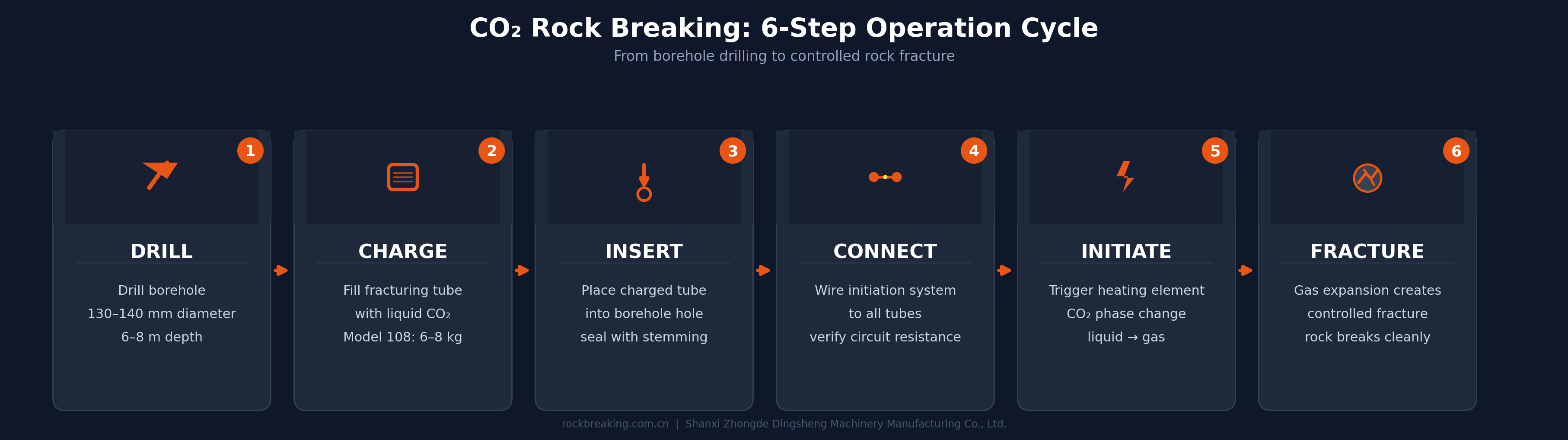
The 6-step CO2 fracturing cycle, from filling to rock removal.
1. Rapid Phase Change
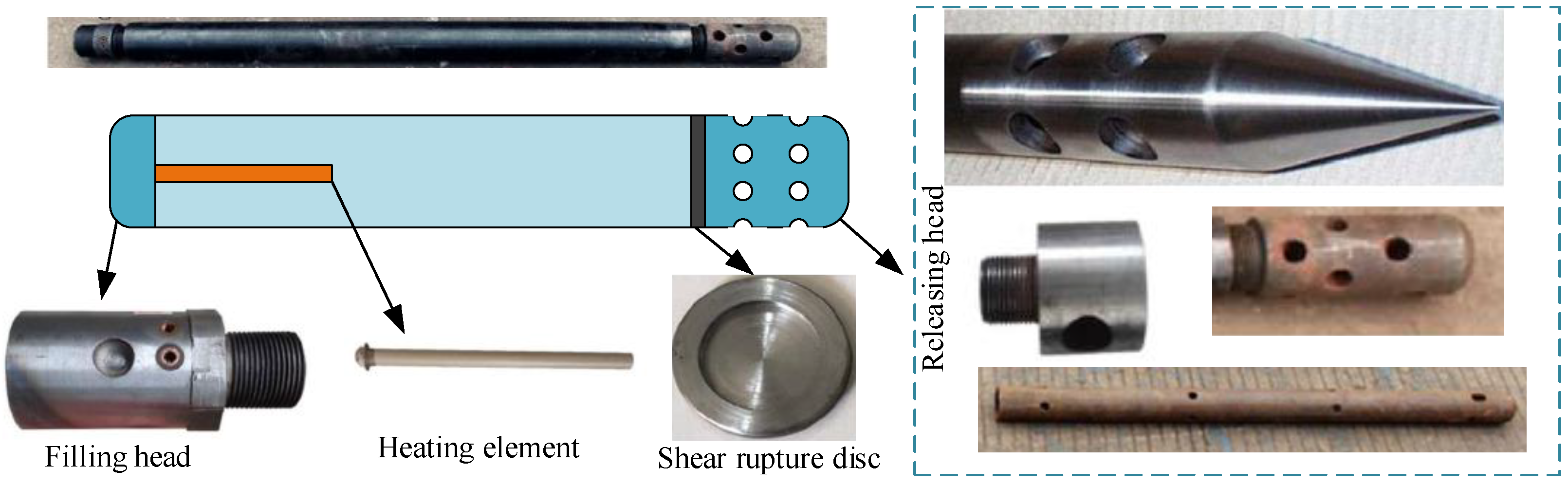
Liquid CO₂ heated within 20-40 ms by an electric activator. Instantaneous volume expansion of 600× generates 200-300 MPa of pressure inside the sealed steel tube.
2. Pressure Relief & Jet Formation
At 60-270 MPa (adjustable), the rupture disc bursts. High-pressure CO₂ gas exits as a high-velocity jet at hundreds of meters per second — pure physical energy, no detonation.
3. Two-Stage Fracturing
Dynamic Stress Wave: shock waves initiate primary cracks. Gas Wedging: high-pressure gas infiltrates cracks, driving propagation until rock fragments completely. No flyrock beyond 5m.
Product Specifications
Two standard systems to match your operation scale — from precision underground work to heavy open-pit production.
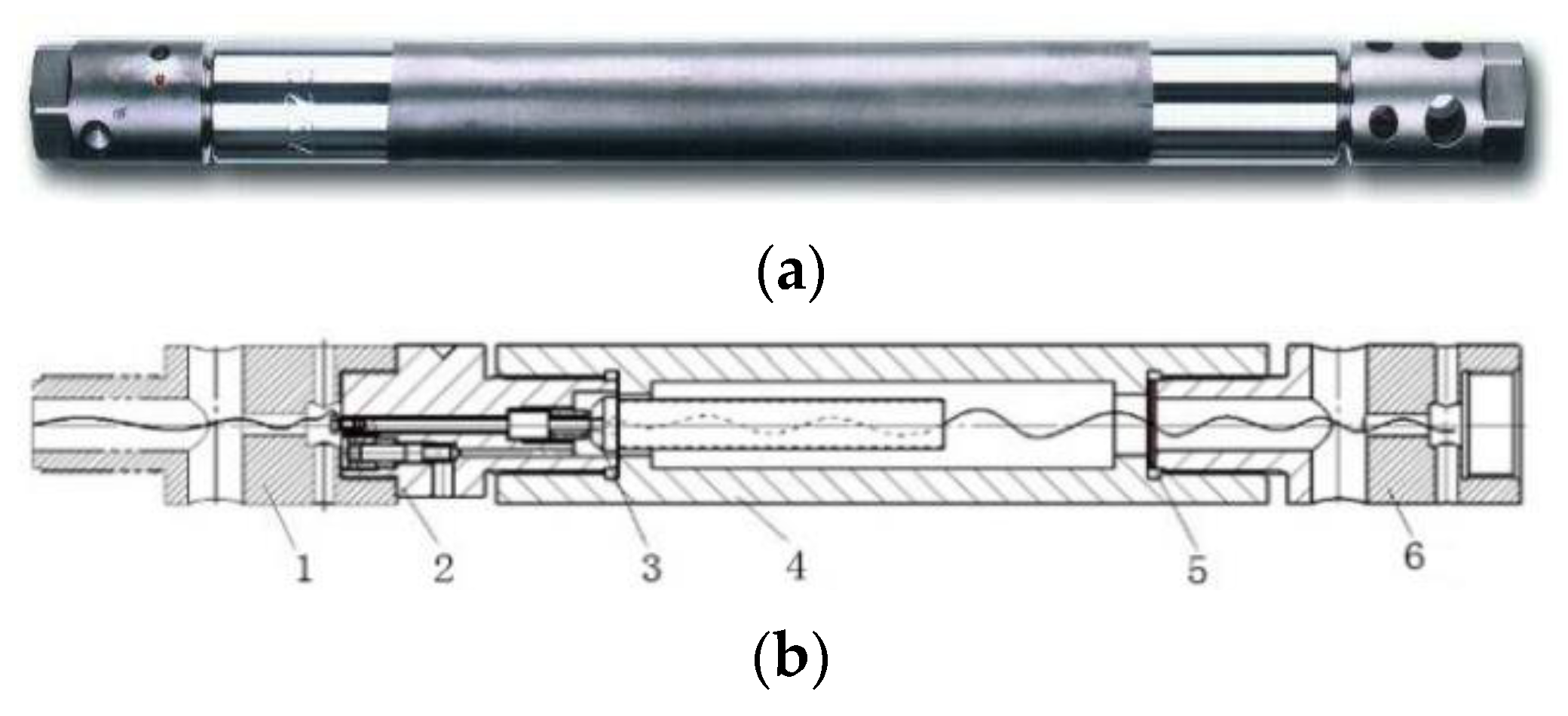
| Parameter | 51# System | 108# System |
|---|---|---|
| Tube Diameter | 51 mm | 108 mm |
| Standard Length | 1.2 m | 2.2 m |
| CO₂ Capacity | 0.4 – 0.5 kg | 6 – 8 kg |
| Tube Weight | 12 kg | 83–98 kg |
| Required Hole Diameter | 60-76 mm | 130-142 mm |
| Rupture Pressure Range | 60 – 200 MPa | 120 – 270 MPa |
| Phase Change Time | 20 – 40 ms | 20 – 40 ms |
| Tube Material | High-Strength Alloy Steel | High-Strength Alloy Steel |
| Best For | Underground mining, precision work, narrow tunnels | Open-pit mining, large quarrying, heavy excavation |
Complete technical specifications including all intermediate models (57#, 73#, 83#, 89#, 95#, 102#) are available in the downloadable product brochure or via inquiry.
Includes: technical drawings, operation manual, safety guidelines, and case studies
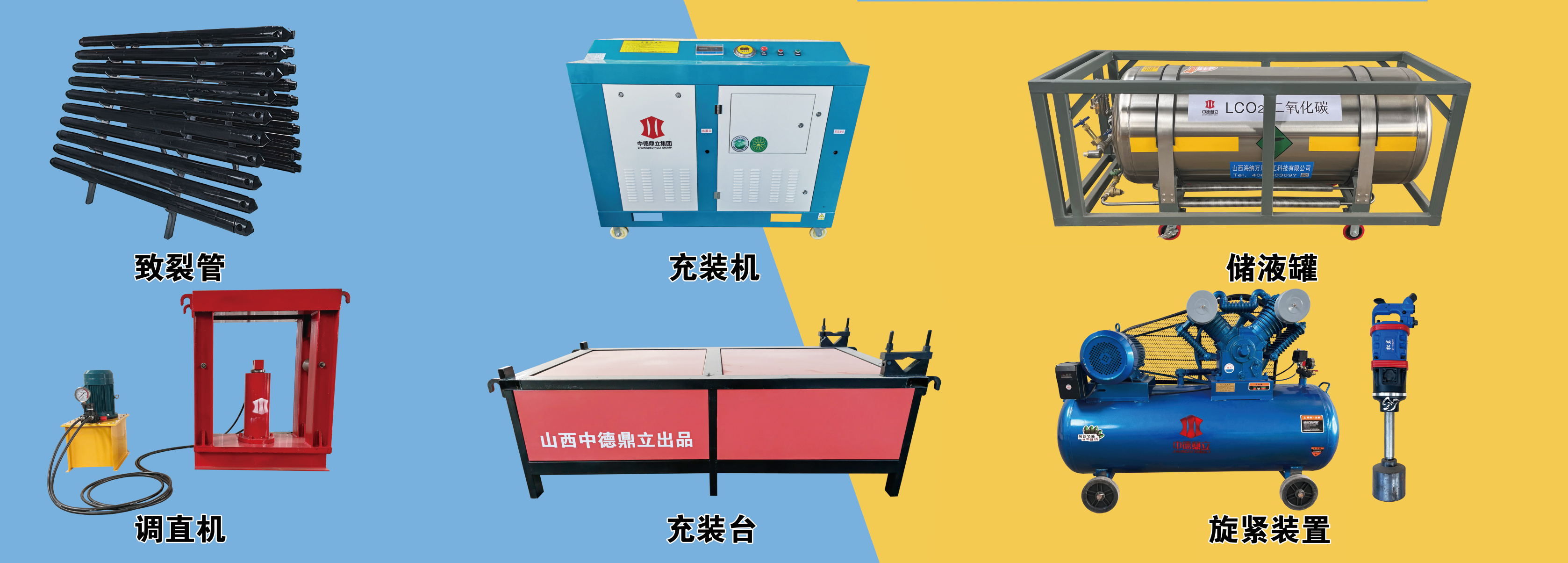
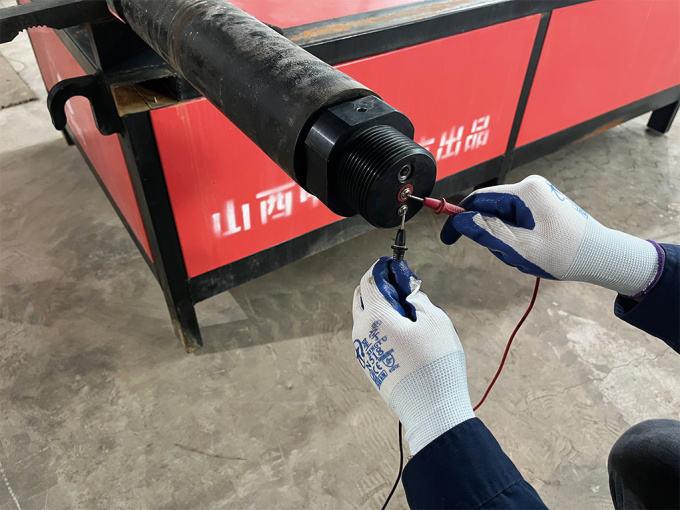
System ComponentsEvery CO2 fracturing system includes four integrated subsystems for a complete operational workflow. | |||
CO2 Fracturing vs. Conventional Explosives
See the complete comparison guide for full data tables including hydraulic splitters — here are the headline numbers.
| Metric | CO2 Fracturing | Conventional Explosives |
|---|---|---|
| Vibration (30m) | 0.18 cm/s | 2.61 cm/s |
| Flyrock Distance | Under 5 m | 50+ m |
| Blasting Permit | Not required | Required (often denied) |
| Toxic Gas Emission | None (CO₂ only) | CO, NOx, SOx |
| Underground Use | Safe (spark-free) | Prohibited in gas-rich mines |
Read the complete guide → for detailed equipment specs, ROI analysis, and application case studies.
Reusable vs. Disposable Tubes
Two paths — choose based on your regulatory environment and production volume.
🔄 Reusable Tubes
- High-strength alloy steel rated for 600+ cycles
- Higher upfront cost, dramatically lower per-shot cost
- Requires post-fracturing tube recovery and refilling station
- Best for: High-volume operations, permitted mining sites
📦 Disposable Tubes
- Single-use sealed cartridge — no recovery system needed
- Lower upfront cost, higher per-shot cost
- Zero blasting permits required in most jurisdictions
- Best for: Short-term projects, restricted zones, urban sites
Full cost-breakdown and ROI analysis available in the complete CO2 rock breaking guide →
Applications
From 40-meter urban setbacks to 500-meter-deep gas-rich coal mines — CO2 fracturing works where explosives can’t.
⛏️ Mining & Quarrying
Open-pit coal, metal ore, limestone — where blasting bans or safety regulations restrict explosives.
🏗️ Urban Construction
Foundation excavation, demolition, and tunneling within meters of occupied buildings.
🛣️ Infrastructure
Highway cuts, railway tunnels, metro systems — zero interruption to adjacent traffic.
⛽ Hazardous Environments
High-gas coal mines and underground operations — no open flame, no spark risk.
🔧 Maintenance
Clearing equipment blockages and emergency rescue in confined industrial spaces.
🌍 Sensitive Zones
Environmental protection areas and heritage sites — minimal disturbance, no chemical contamination.
Colombia Limestone Quarry: Blasting Permit Denied 3 Times — Solved
A mining crew in Colombia’s Antioquia region faced shutdown when regulators denied their blasting permit three times — their quarry sat just 40 meters from homes. After switching to a CO2 fracturing system, they achieved 1,500–2,000 m³ per shift with zero complaints and zero permit delays. That project is now in its fourth year of continuous operation.
Trusted Across 50+ Countries
Frequently Asked Questions
See the complete guide for detailed answers — here are the most common questions from buyers.
How much does a CO2 fracturing system cost?
Do I need a blasting permit for CO2 fracturing?
What’s the production rate per day?
How does CO2 fracturing compare to hydraulic splitters?
Ready to Get Started?
Tell us about your project — rock type, production target, site conditions — and we’ll recommend the optimal configuration. Response within 24 hours.
Free consultation · No obligations · Response within 24 hours
📖 Want the deep dive? Read our complete CO2 rock breaking guide with equipment specs, cost analysis, and real case studies — CO2 Rock Breaking: The Complete Guide →